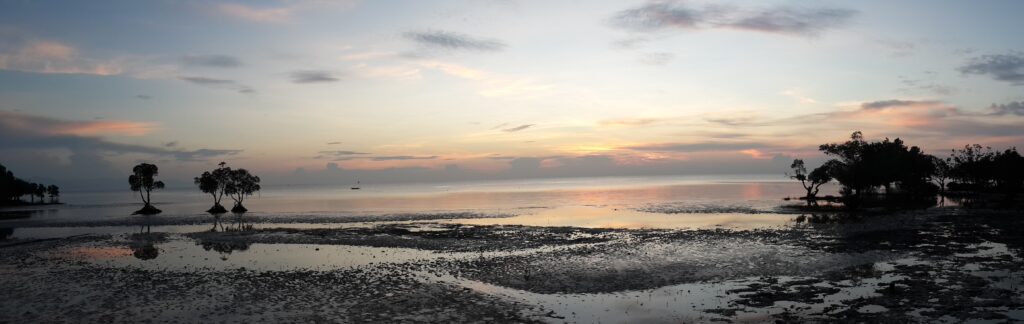
Southern Africa’s Coastal Superheroes: A Deep Dive into Mangrove Forests

By Marize Koekemoer

FOOD FOR THOUGHT
Coastal Mangrove Forests by Marize Koekemoer

South Africa's Coastal Superheroes: A Deep Dive into Mangrove Forests

Here in sunny South Africa, our diverse landscapes extend beyond the savannas and mountains to the vital ecosystems along our coastline. South Africa’s mangrove forests are critical ecosystems along the eastern coastline, representing the southernmost distribution of mangroves in Africa. These mangrove forests stretch from just north of East London in the Eastern Cape, along the KwaZulu-Natal coastline, up to Kosi Bay near Mozambique (and into Mozambique) covering a relatively small area of approximately 2,000 hectares. Often misunderstood and overlooked, these unique “trees of the tide” are, in fact, some of the planet’s most important habitats, playing a critical role in both environmental health and human well-being.

What Exactly Are Mangroves?

Mangroves are woody trees and shrubs remarkably adapted to survive in harsh, saline, and often oxygen-poor intertidal zones. South Africa is home to several key mangrove species, each with unique adaptations:

  • White Mangrove (Avicennia marina): Typically found closest to the water’s edge, identifiable by their “pencil roots” (pneumatophores) that protrude from the mud to absorb oxygen. They also excrete excess salt through glands on their leaves with salt crystals sometimes visible on the leaves itself.
  • Black Mangrove (Bruguiera gymnorrhiza): These trees feature distinctive “knee roots” that protrude from the mud and manages salt by accumulating it in older leaves, which then fall off.
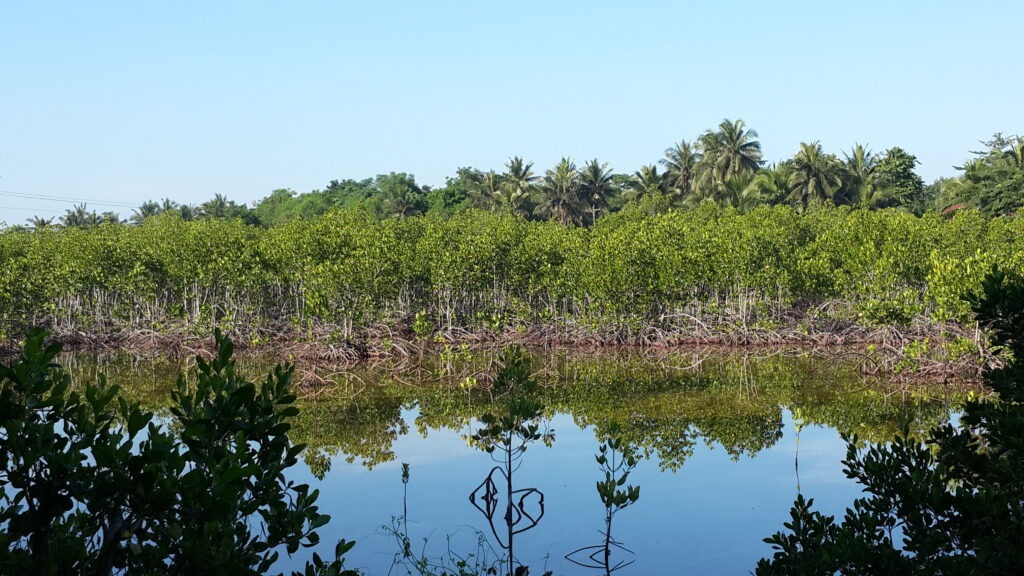
  • Red Mangrove (Rhizophora mucronata): Characterized by iconic “prop roots” that emerge from the trunk and branches, forming a tangled network above the water, providing structural support in soft mud, and filtering out 90% of salt at their roots.

Unlike mangroves in other parts of the world, South Africa’s mangroves face a unique challenge in that they cannot easily expand southward due to fierce wave action, which washes seeds onto beaches instead of allowing them to settle in estuaries. This makes every existing patch irreplaceable.

The Incredible Purpose of Mangrove Forests

These unassuming forests are true multi-taskers, providing a wealth of “ecosystem services”:

  • Coastal Protection & Defence: The dense, intricate root systems act as natural barriers, slowing down waves, trapping sediments, and stabilizing shorelines. They reduce the impact of storm surges, erosion, and even tsunamis, protecting coastal communities and infrastructure by absorbing much of a powerful wave’s energy. With 2.4 billion people globally living near coasts, mangroves are frontline defenders against storms and sea-level rise, reducing wave energy by an estimated 70%.
  • Carbon Sinks (Our Climate Allies!): Mangroves are climate change superheroes! They are highly efficient at absorbing carbon dioxide (CO2) from the atmosphere. They store up to four times more carbon per hectare than most terrestrial forests, locking away “blue carbon” in their waterlogged soils for centuries, even millennia, where decomposition is slowed. This makes them vital in mitigating global warming. Destroying them releases centuries of sequestered CO2.
  • Nurseries of the Sea: The submerged root networks provide a safe, sheltered haven for the juvenile stages of countless marine species, acting as underwater nurseries. Young fish, crabs, prawns, and other invertebrates find refuge from predators and strong currents, allowing them to grow before venturing into the open ocean. An estimated 75-90% of commercial fish species rely on mangroves as nurseries, directly supporting fisheries and the livelihoods of coastal communities, including South Africa’s prawn industry which depends on estuaries like St. Lucia.
  • Biodiversity Hotspots: Beyond marine life, mangroves teem with biodiversity:
    • In the mud: Invertebrates like red mangrove crabs, fiddler crabs (eco-engineers that aerate soil and recycle nutrients), mudskippers, snails, and microscopic organisms thrive in the mud.
    • In the water: Common fish found in these ecosystems include mullet, spotted grunter, and Cape stumpnose. Other notable species include dusky kob, leervis, and mudskippers, with some like the mudskipper being entirely dependent on mangroves. Estuaries, which often contain mangroves, are also important for various fish species, with over 170 species recorded, and 79 wholly or partially dependent on them.
    • Above the water: The branches provide roosting and nesting sites for a variety of birds, including the near-endemic Mangrove Kingfisher (a flagship species for conservation that specializes in hunting crabs), egrets, herons, and African fish eagles. Mammals like vervet monkeys and African clawless otters (apex predators controlling fish/crab populations) are also known to forage in and around mangrove fringes. Loggerhead Turtles (coastal guardians), nest on beaches fringing mangroves. Other residents include pink-backed pelicans and water mongooses.
  • Water Quality Regulators: The dense roots and associated microorganisms help filter pollutants from land runoff, improving water quality in estuaries and coastal waters. This benefits marine life within the mangroves and protects adjacent ecosystems like coral reefs and seagrass beds, which are sensitive to sediment and excess nutrients.

Why Mangroves Need Our Protection (And Why It's Urgent!)

Despite their immense value, mangrove forests worldwide, including those in South Africa, are among the most threatened ecosystems.  We’ve lost significant areas globally, and the threats continue to mount:

  • Coastal Development: Urban expansion, port development (historically seen in Durban and Richards Bay), tourism infrastructure, and aquaculture often lead to the clearing and fragmentation of mangroves.
  • Pollution: Industrial runoff, sewage, and plastic pollution can severely degrade mangrove health, impairing their ability to filter and thrive.
  • Unsustainable Harvesting: In some areas, mangroves are harvested for timber, fuel, and charcoal without sustainable management, leading to deforestation.
  • Altered Freshwater Flow: Dams and irrigation schemes can reduce the flow of freshwater into estuaries, altering the delicate balance of salinity that mangroves need to survive, leading to deadly salinity shifts.
  • Climate Change: Rising sea levels and increased frequency of extreme weather events pose direct threats. Unlike Brazil or Australia, South African mangroves cannot easily migrate southwards to adapt to rising seas.

The loss of mangroves has dire consequences like increased coastal erosion, reduced fish stocks affecting livelihoods, exacerbated climate change impacts, and a decline in biodiversity.

Protecting South Africa's Mangrove Marvels: Local Initiatives

Fortunately, dedicated efforts are underway to protect and restore South Africa’s invaluable mangrove forests:

  • Legal Armor: Mangroves are protected under the National Forests Act, requiring environmental impact assessments for any activities that could harm them.
  • Marine Protected Areas (MPAs): Key mangrove areas, such as portions of the iSimangaliso Wetland Park in KwaZulu-Natal (a UNESCO World Heritage Site), offer a level of protection, restricting harmful activities and allowing these ecosystems to recover.
  • Local Research and Monitoring: Academic institutions and research organizations actively study South African mangroves. This includes shark tagging programs to understand how these nursery habitats contribute to shark populations, and research into carbon sequestration rates, which could pave the way for “blue carbon” initiatives where conservation efforts earn carbon credits.
  • Citizen Science and Awareness: Organizations like the South African Association for Marine Biological Research (SAAMBR) and uShaka Sea World are crucial for public education, raising awareness through educational programs and citizen science initiatives.
  • Community Engagement and Sustainable Practices: Empowering local communities living near mangroves is vital. Programs like the Cwebeni Honey Cooperative in Mngazana (South Africa’s third-largest mangrove forest), where Wild Coast women harvest honey, blend conservation with livelihoods. Promoting sustainable livelihoods (e.g., responsible fishing, ecotourism) and education on the long-term benefits of healthy mangroves, foster stewardship. Efforts to reduce pollution and promote responsible waste management also directly benefit these sensitive coastal environments.
  • Global Alliances: South Africa benefits from the Global Mangrove Alliance, which targets a 20% global increase in mangroves by 2030, and broader initiatives like Wetlands International’s “Mangrove Capital Africa” Programme, supporting safeguarding and restoring mangrove ecosystems. Projects like Sumitomo Corporation’s blue carbon initiatives in Mozambique offer scalable models for carbon credit pioneers.

Join the Fight!

As we observe World Mangrove Day, it’s a powerful reminder that these humble coastal forests are pillars of our ecological and economic well-being. South Africa’s mangroves are tiny, trapped, and irreplaceable. Protecting them isn’t just about saving trees; it’s about securing fisheries, buffering climate chaos, and honouring a unique natural heritage. As ocean scientist Emily Pidgeon notes, “Mangroves are the unsung heroes of coastal resilience.”

You can help by choosing sustainable seafood, avoiding fish from damaged estuaries, supporting ecotourism (e.g., visiting iSimangaliso Wetland Park or Kosi Bay with certified guides), and advocating for mangrove inclusion in national climate strategies (e.g., South Africa’s Nationally Determined Contributions). By understanding their purpose, appreciating their unique adaptations, and supporting dedicated conservation programs, each of us can contribute to safeguarding South Africa’s magnificent mangrove forests for generations to come. Their survival truly is intertwined with our own.

“When the mangroves thrive, our children eat.”
—Anabela Sumaila, Mozambican mangrove beekeeper

Additional Reading

NRF

www.nrf.ac.za

New Study finds mangroves among the most vulnerable ecosystems on the planet – NRF

South Africa’s innovation revolution must assist in solving our society’s deep and pressing socio-economic challenges. Global competitiveness, shrinking …

University of Florida

www.floridamuseum.ufl.edu

Adaptations – South Florida Aquatic Environments

Through physiological adaptations, mangroves are able to live in harsh saline environments. Red mangroves occur where soil salinities range from 60-65 parts …

National Institutes of Health (NIH) | (.gov)

pmc.ncbi.nlm.nih.gov

Mapping accumulated carbon storage of global mangroves from 2000 to 2020 at a 1 km resolution – PMC

Accumulated carbon storage is a crucial indicator for assessing the health of mangrove ecosystems and can suitably reflect the changes in the carbon …

One Earth

www.oneearth.org

Southern Africa Mangroves | One Earth

The flagship species of the Southern Africa Mangroves ecoregion is the African clawless otter. Image credit: Courtesy of Frans Vandewalle, Creative Commons. …
Coastal Mangrove Forests by Marize Koekemoer

Conservation Sign-Up Guidelines

We welcome all conservation organizations committed to making a positive impact on our environment. To join our community of dedicated conservation projects, ensure you meet the following criteria:

Getting Started:

1. Eligibility

Must be a Certified NPC/NPO with a registered South African Bank Account   

Must have an approved PAYFAST Gateway Account

Legitimate Conservation Projects only

Commitment to Transparency

Verification Documents Ready (Refer to our verification guide below)

2. Verification Process

Our commitment to transparency means we verify each conservation organization. Submit the necessary verification documents through our secure portal.

3. Required Verification Documents

Organization Details:

  • Provide comprehensive information about your conservation organization, including its mission, projects, and impact.
  • Upload a valid registration certificate confirming your organization’s legal status.
 

Contact Information:

Submit accurate contact details, including a dedicated email address for communication.

Verification Documents:

  • Upload proof of identification for key organizational members.
  • Provide project-related documents for the initiatives you wish to showcase.
 

Verification Process:

Our team will carefully review your submission to verify its legitimacy and alignment with our mission. This process typically takes 3-5 business days.

4. What’s Next?

Once verified, your conservation project will be live on our platform. Donors can find, support, and contribute directly to your cause. Share you link and let the Fundraising begin!

5. Donation Process

Donors contribute directly to your conservation project through our platform. 

Secure Payment Gateway: We use PayFast (A Trusted Payment Gateway Service Provider) for seamless transactions. 

Transaction Fee: A 10% fee is deducted for GAAAP, plus the Payment Gateways Transaction fees. See below for more information.

6. Ongoing Support

We provide ongoing support and marketing to ensure your conservation efforts receive the attention they deserve. Regular updates keep our supporters informed and engaged. Join us in Creating a Sustainable Future for Our Planet!

Our Transaction Fee

A 10% transaction fee is applied to the donation amount donated on our platform to cover platform maintenance, marketing efforts, support, and further development. This helps us sustain and grow, ensuring we can continue supporting conservation efforts. 

Our Payment Gateways Transaction Fee

PayFast deducts a standard fee for processing payments securely.

Please review PayFast’s fee structure on their official website for more details.